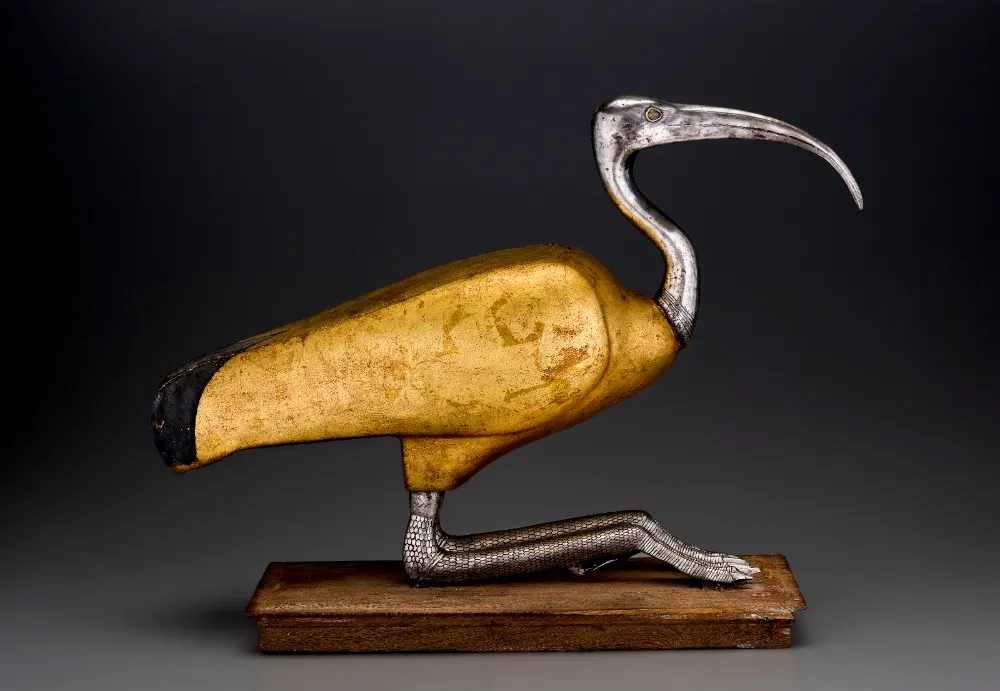
Animals held a central (and at times supernatural) role in ancient Egyptian life. Rare among ancient cultures, Egyptians believed that animals had souls. Since most species were thought to have a connection to a particular deity, after death the soul of a mummified animal could carry an individual’s message to a god.
The scale of this practice is staggering. In the ancient burial ground at Saqqara, Egypt, a single animal cemetery alone has yielded over four million individual ibis mummies. The nearby canine cemetery holds more than seven million. Other sites across Egypt contain the remains of countless cats, snakes, and various other creatures.
See in person how art history, archaeology, and forensic science combine to uncover the mysteries behind this remarkable aspect of ancient Egyptian religion and culture.
Drawn from the Brooklyn Museum’s renowned collection, Divine Beasts: Animal Mummies from Ancient Egypt brings together over 30 mummies and 69 masterworks of Egyptian art. This exhibition is organized by Yekaterina Barbash, Curator of Egyptian, Classical, and Ancient Near Eastern Art, and Edward Bleiberg, Curator Emeritus, Brooklyn Museum.
Ibis Coffin, possibly from Tuna el-Gebel, Egypt, Ptolemaic Period, 305–30 B.C.E., with later additions. Wood, silver, gold, and rock crystal, 15 1/16 × 7 15/16 × 21 15/16”. Brooklyn Museum; Charles Edwin Wilbour Fund, 49.48. Photo: Gavin Ashworth, Brooklyn Museum


